
Physical examination
Clubfoot is usually diagnosed soon after birth by examining the baby's foot position and shape. In most cases, no special tests are needed.
Early diagnosis and timely treatment give children the best chance of developing normal walking and long-term mobility.

Most cases can be diagnosed soon after birth by looking at the baby's foot position and shape.
Clubfoot is usually diagnosed soon after birth by examining the baby's foot position and shape. In most cases, no special tests are needed.
Sometimes an X-ray may be used to assess how severe the deformity is.
Modern ultrasound scans can detect clubfoot as early as the 20th week of pregnancy, giving parents time to learn about the condition and plan early care.
The Ponseti method is the most common and effective treatment worldwide — and the method practiced at the DWS centre.
 BRACING IS PART OF LONG-TERM CORRECTION
The original DWS page describes a staged treatment pathway.
Gentle stretching and weekly casting of the foot for several weeks.
A minor procedure may be used to loosen the tight heel tendon when required.
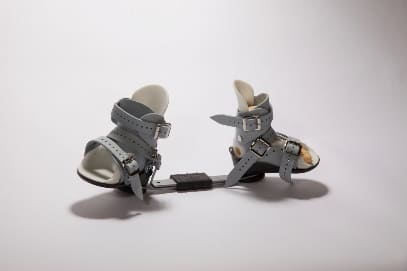
A brace or special shoes help keep the foot in the corrected position — full time initially, then during sleep until around age 3–4 years.
Parents play an important role by ensuring braces are worn as instructed. This helps prevent the foot from turning inward again.
In a few cases where casting alone does not correct the deformity, surgical correction may be required. Surgery is usually followed by casting and bracing to maintain the correction.